The Moon Phase That Happens Before the Beginning
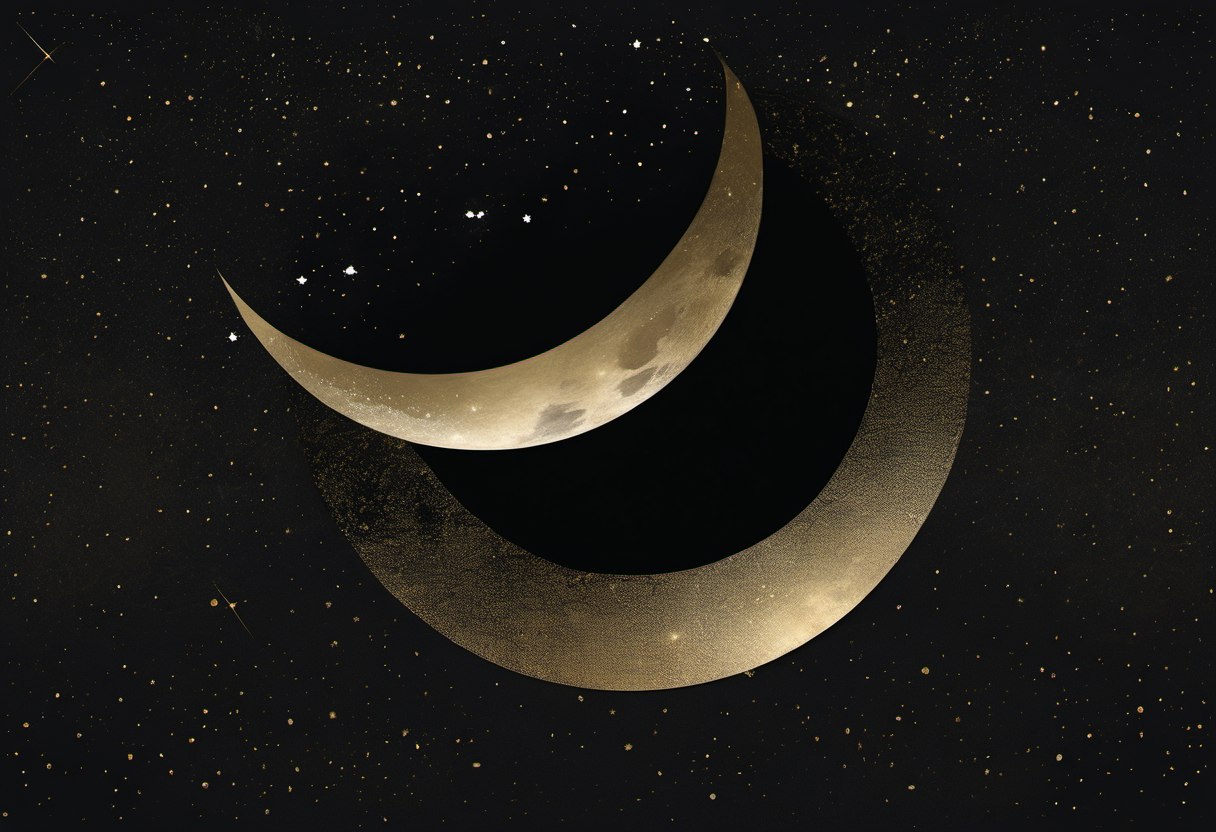
Most people who follow the Moon at all know two of its phases: the New Moon, for starting something, and the Full Moon, for whatever that something has grown into by the time it peaks. The actual cycle tracked in lunar astrology has eight named phases, not two: New Moon, Crescent, First Quarter, Gibbous, Full Moon, Disseminating, Last Quarter, and Balsamic. The four everyone skips are exactly the four that come after the Full Moon — the back half of the cycle, the part where the energy that peaked has to actually go somewhere.
What Happens After the Peak
The traditional reading of that back half runs in a clear sequence. Once the Full Moon has crested, whatever was begun at the New Moon starts to fall away on purpose — not as loss, but as the natural next step. The Disseminating Moon that follows is the phase for sharing what was gained at the peak: teaching it, broadcasting it, handing it outward instead of holding it. The Last Quarter is where the parts that no longer serve get released deliberately, a kind of clean-out. And the Balsamic Moon, the last phase before the cycle turns over again, is the quiet one — a phase of rest and dissolving, sometimes called the Dark of the Moon, where almost nothing visible is happening at all.
The peak isn't the finish line. It's the middle of a cycle that still has half its work left to do.
The Traditions That Don't Start Counting at New Moon
Here's the detail that reframes the whole cycle: some lunar traditions don't treat the New Moon as the actual beginning at all. They place the true start at the Dark Moon — the void, the darkness just before that first visible sliver appears — not because nothing is happening there, but because that emptiness is the actual precondition for anything new to take root. A seed doesn't germinate in ground that's still full of last season's growth. The clearing has to happen first, fully, before the New Moon's first light means anything. What looks like the least eventful phase of the whole cycle — dark, quiet, seemingly empty — is, in that reading, the phase doing the most essential work of all.
Seven Stories, One Question
This is the seventh story here, and it's worth naming what's been running underneath all of them. The Fool is a card that refuses an ordinary number. The Master Numbers refuse to be simplified into something smaller. Saturn Return is the return to a birth-point most people never think to look back at. The BaZi Day Master is one character quietly organizing seven others around it. The I Ching's changing line turns out to be the strongest one, not the weakest. Rahu and Ketu are two of the most influential points in a Vedic chart, and neither one is a physical thing. And now the Balsamic Moon — the darkest, quietest phase of the whole month — turns out, in some traditions, to be the actual starting line. Seven systems, seven different vocabularies, and the same instinct running through every one of them: what looks like nothing is very often exactly where the real work is happening.
More reflections at The Kyshara Realm, or read what Kyshara is building.