Saturn Return: The Planet That Waits 29 Years to Check Its Own Work
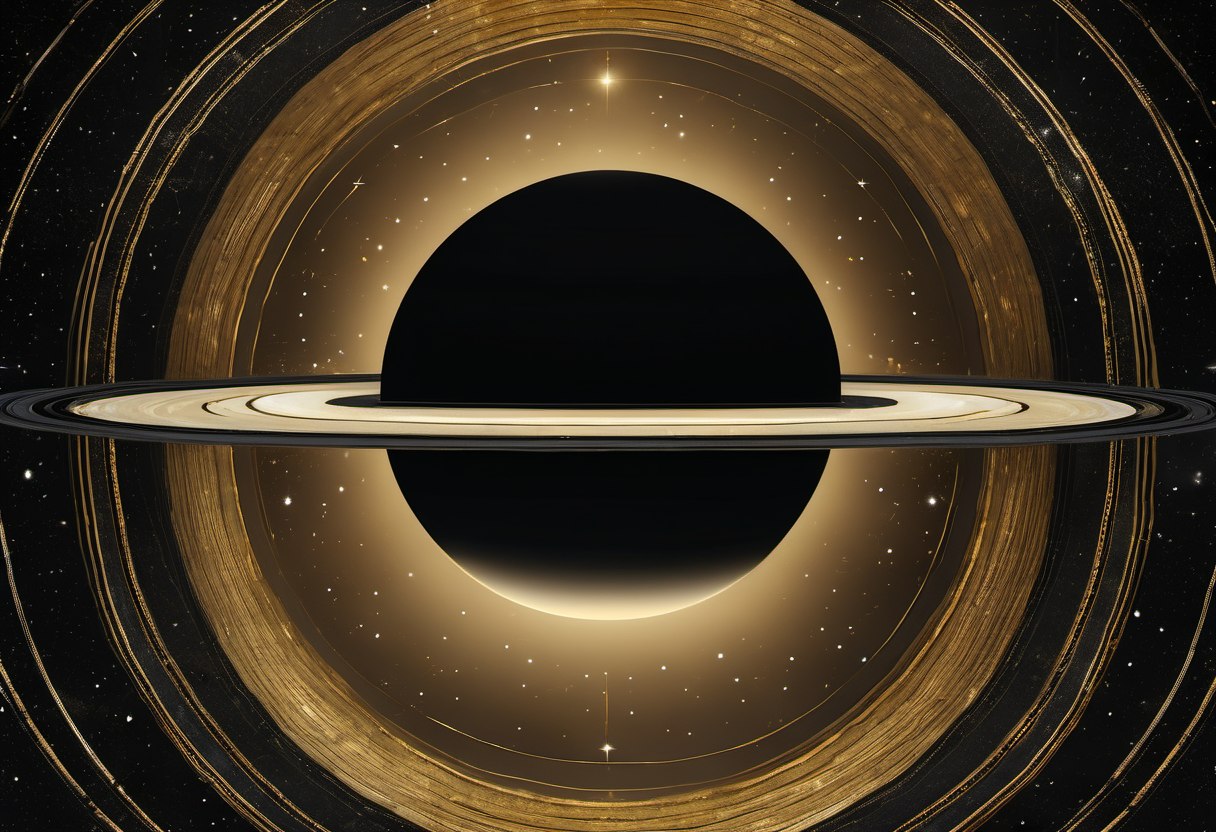
Saturn takes roughly twenty-nine and a half years to complete one full orbit of the Sun. That's the entire concept in one sentence: sometime around your late twenties, Saturn arrives back at the exact position in the sky it occupied the moment you were born. Astrology calls this your first Saturn Return, and treats it as one of the most significant thresholds a person crosses — not because anything mystical happens on that specific day, but because it's the first time in your life you've lived through an entire cycle of something long enough to actually see its shape.
The Rhythm Underneath It
The Return isn't astrology's only checkpoint with Saturn — it's just the loudest one. The same slow planet marks quieter moments on the way there: a square to its own natal position around age seven, an opposition around fourteen, another square around twenty-one, and finally the full return around twenty-nine or thirty. Read end to end, it's a rhythm of quarters — childhood, adolescence, early adulthood, and then the reckoning — each one a smaller version of the same question Saturn keeps asking: what have you actually built with the structure you were given.
Why the First Lap Is the One That Teaches You Anything
There's a simple, almost mechanical reason this particular birthday range gets treated as special: until a planet has completed one full circuit during your lifetime, you have no real reference point for what its cycle even looks like. You're living every phase of it for the first time, with no earlier lap to compare it to. The Saturn Return is the moment that changes — not because the planet does anything different, but because you finally have an entire completed circuit behind you. You can look back at the ambitions you had at twenty-two, the choices that followed, the structures you built or avoided building, and actually see the whole shape of it instead of just the piece you were standing in at the time.
Saturn is a time marker, not a verdict — and it only feels like a verdict for the people who spent the years leading up to it simply marking time instead of building anything with them.
Not Automatically a Crisis
The Saturn Return has a reputation for arriving as a personal crisis, and it's worth pushing back on that a little. The tradition behind it doesn't actually promise a reckoning that has to hurt. What it promises is scrutiny — a close, honest look at what the last three decades actually produced — and scrutiny only feels devastating to someone who avoided looking closely the whole time it was happening. For someone who's been growing steadily, putting in the persistent, unglamorous effort year over year, the Return tends to land as confirmation rather than collapse: proof that the structure holds, that the last decade wasn't wasted, that the discipline was pointed somewhere real.
That doesn't mean the Return is comfortable. Even a good, honest audit of your own life asks something of you — it just doesn't have to be punishing to be real.
The Same Question, a Third Way
The Fool is tarot's card for the step before any track record exists. The Master Numbers are numerology's refusal to collapse real complexity into something simpler than it is. Saturn Return is astrology's version of the same underlying idea, seen from the far end instead of the near one: the moment you finally have enough of a track record to actually read, and the discipline to look at it honestly instead of flinching away.
If you're somewhere in that late-twenties or late-fifties window right now, that's not a coincidence worth dreading. It's the first real chance to see your own first lap all the way around. More reflections at The Kyshara Realm, or read what Kyshara is building.
Saturn's return is read against the whole chart. Kyshara's full natal chart reading interprets the complete sky at your first breath, including where Saturn sits.