Selenite: The Moon-Named Crystal That Dissolves in the Rain
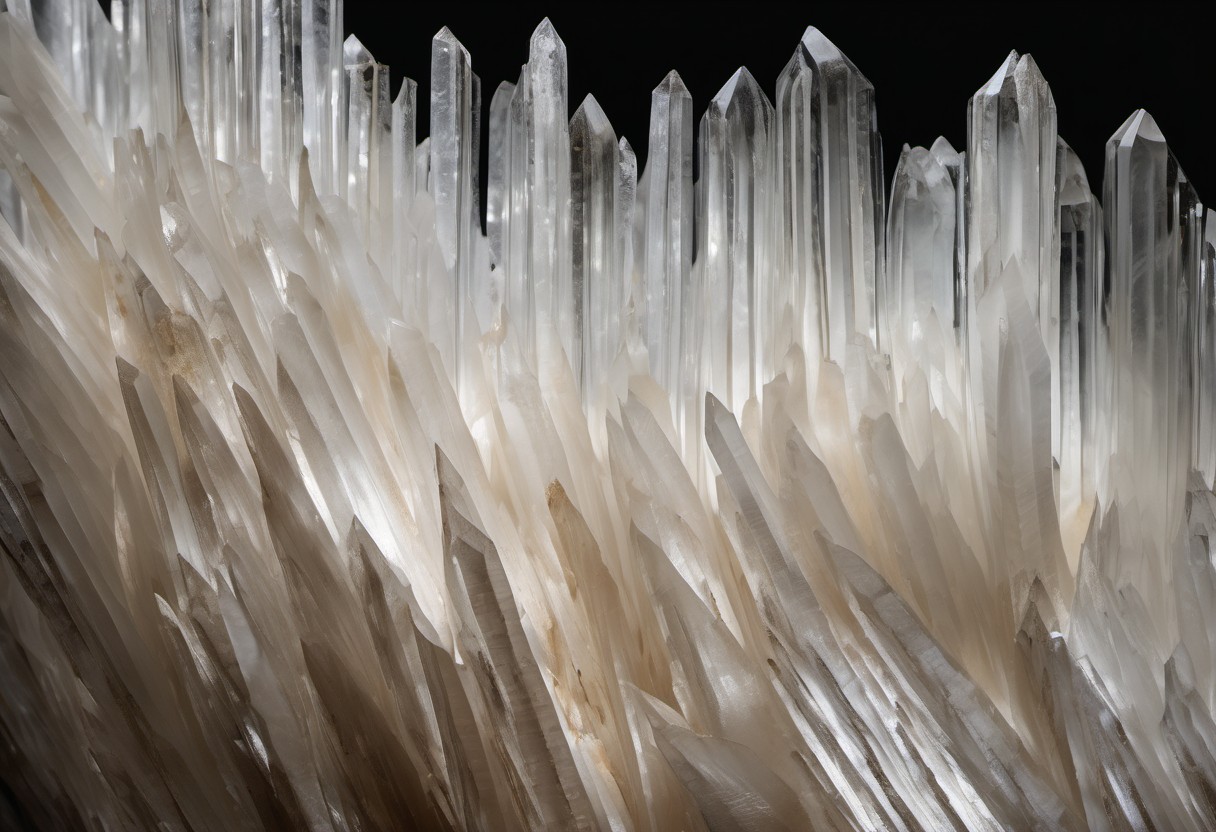
Selenite isn't quartz at all, a distinction that surprises people who assume most translucent white crystals belong to the same family. It's a crystalline form of gypsum, calcium sulfate dihydrate, and it registers at just 2 on the Mohs hardness scale, soft enough that a fingernail, which sits around 2.5, can leave a mark on it. That softness is tied directly to its structure: selenite forms in thin, flexible, often fibrous sheets or blades, which is why polished pieces have that unmistakable silky, almost liquid sheen when light moves across the surface. Large selenite formations, including the famous crystal caves of Naica in Mexico, where some beams grew to over 30 feet, developed over hundreds of thousands of years in mineral-rich water before the caves were drained.
Named for the Moon, for a Good Reason
The name selenite comes from the Greek selenites, tied to Selene, the goddess who personified the moon, and it's not a poetic stretch. Thin sheets of selenite are naturally translucent, and light passing through them takes on a soft, diffuse, silvery quality that genuinely resembles moonlight. Ancient sources, including Pliny the Elder's writings, describe selenite-like stones associated with lunar cycles, and the visual link between the mineral's glow and moonlight has held steady across the roughly two thousand years since the name was first recorded.
It's rare for a mineral's name to still make immediate visual sense two millennia later. Hold a thin piece of selenite up to a window and you understand exactly why someone reached for the moon to describe it.
The Practical Warning Worth Knowing
Because selenite is gypsum, it is genuinely water-soluble, meaning prolonged exposure to water can dissolve or degrade the surface, dulling its shine or breaking down thinner pieces entirely over time. This is one of the few pieces of crystal care advice that rests on hard chemistry rather than tradition: cleaning selenite with water is a real, avoidable mistake, and most sellers now recommend dry methods only, such as wiping with a soft cloth or leaving it in indirect moonlight, which conveniently doubles as a nod to the stone's own name and its traditional cleansing lore.
A Stone for Clearing, Traditionally
In contemporary crystal practice, selenite is traditionally associated with cleansing and mental clarity, often used to wipe or sweep the air around a space or another crystal, treated less as a stone that holds energy and more as one believed to clear it, an idea that maps neatly onto its glow and its fragility both. It's frequently placed at thresholds or used to physically pass a wand-shaped piece over the body during meditation. As with every stone in this collection, that's a tradition rather than a clinical claim, carried forward by people who found something clarifying in a mineral soft enough to carve with a coin and named after the moon itself.
Read more from the collection in The Kyshara Realm, or see what Kyshara is building.
If you would like to know which stones suit your own season and intent, Kyshara's Crystal & Gemstone reading is built for exactly that.