Rose Quartz: The Stone That Never Learned to Shout
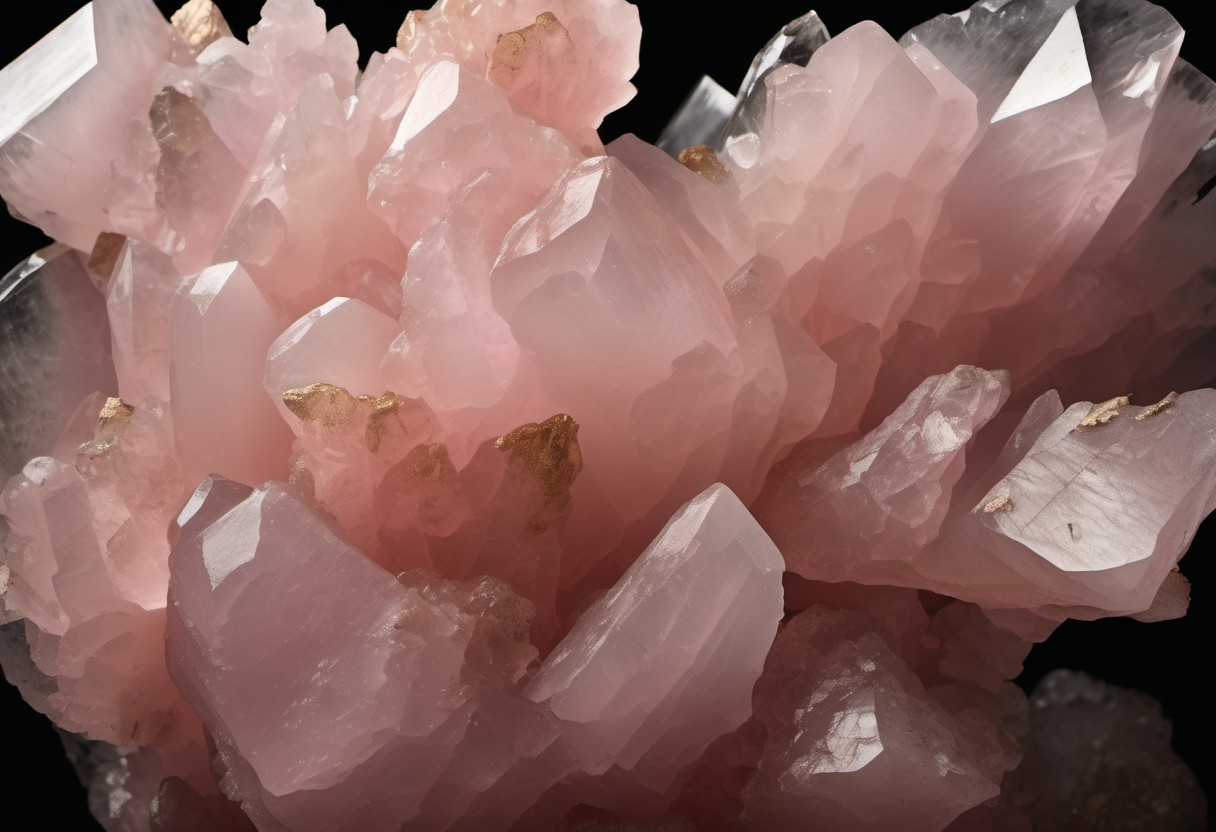
Rose quartz is silicon dioxide, the same mineral that makes up nearly every grain of sand on earth, and yet it never quite reads as ordinary. What separates it from clear quartz is a whisper of trace elements, most likely titanium, iron, or manganese, distributed through the crystal lattice in amounts too small to weigh but plenty large enough to color it. Most rose quartz forms not as sharp pointed crystals but as massive, cloudy chunks, which is part of why gemologists now suspect the color owes something to microscopic mineral fibers as well, possibly a borosilicate called dumortierite, tangled invisibly through the stone. It is a soft pink built out of a technicality, and somehow that has never dimmed its reputation as the warmest stone in the case.
A Color the Ancient World Already Recognized
Rose quartz beads have turned up in Mesopotamian sites dating back roughly six thousand years, and the Egyptians carried the association further, using the stone in jewelry and, according to persistent tradition, in early facial treatments meant to preserve youth and prevent wrinkles. Cleopatra is often credited with using rose quartz in her beauty regimen, though the historical record here leans more on legend than ledger. What is better documented is the Roman use of rose quartz for signet rings and seals, a practical application that had nothing to do with romance and everything to do with the stone's workable hardness, a 7 on the Mohs scale, hard enough to hold a carved design for centuries.
It has never needed to be rare to be wanted. Rose quartz is one of the most abundant colored quartz varieties on earth, and still every culture that touched it decided it meant something about the heart.
Why Every Culture Landed on the Same Idea
What's strange, if you study the spread of rose quartz lore across unconnected civilizations, is how consistently it converges on the same theme. Egyptian, Roman, and later European traditions all independently arrived at associations with love, beauty, and emotional healing, well before global trade could have spread the idea between them. Some of that is probably just color psychology; soft pink reads as gentle to nearly every human eye, a near-universal visual shorthand for tenderness rather than a coincidence requiring a deeper explanation. But the durability of the association matters too. This wasn't a Victorian invention or a modern rebrand. It's one of the oldest continuously held beliefs in the mineral world.
What the Stone Is Asked to Do Today
In contemporary crystal practice, rose quartz is traditionally associated with self-love before romantic love, a reordering that feels distinctly modern even though the stone itself is ancient. Practitioners often place it near the heart, on a nightstand, or carry it during periods of grief or relationship repair, treating it less as a fix and more as a companion object, something held during the parts of healing that don't have a shortcut. None of this is a medical claim or a guarantee; it's a tradition, carried stone to stone, hand to hand, for thousands of years, by people who kept reaching for the same soft pink rock when something in their life needed gentleness.
Curious what else lives in the collection? Explore more of The Kyshara Realm, or read about what Kyshara is building.
If you would like to know which stones suit your own season and intent, Kyshara's Crystal & Gemstone reading is built for exactly that.