Citrine: The Sunlit Stone That Is Usually Someone Else in Disguise
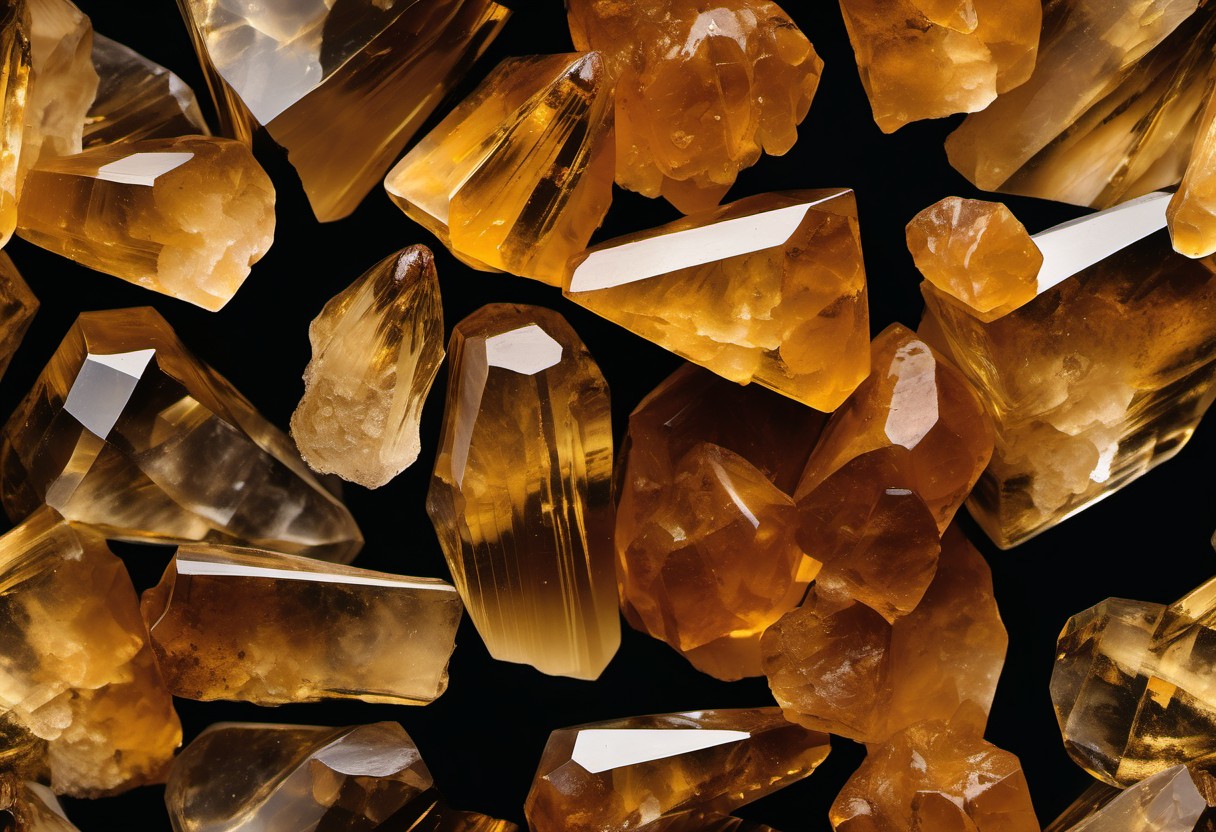
Citrine is quartz colored yellow to amber by trace iron, and in its natural state it is one of the rarer quartz varieties on earth, far rarer than its abundance in jewelry stores would suggest. The honest explanation is that most commercial citrine is heat-treated amethyst or smoky quartz. When purple amethyst is heated to specific temperatures, generally in a range that alters the oxidation state of its iron impurities, its color shifts toward yellow, orange, or reddish-brown, and the resulting stone is legally and commonly sold as citrine. Natural, untreated citrine does exist, with notable deposits historically in Brazil and Madagascar, but it tends to be paler and less saturated than the deep amber tone most people picture when they hear the word, precisely because that deeper tone is usually the fingerprint of a kiln.
A Gem the Ancient World Already Prized
Citrine's history as a cut and polished decorative gem stretches back to ancient Greece, where it was used in jewelry as early as 300 BCE, valued for a warm color that needed no explanation to be desirable. It saw another wave of popularity during the Art Deco period of the 1920s and 30s, when large citrine gems set into gold became a signature look, worn by film stars and set into statement jewelry precisely because the stone could be sourced in large, clean, affordable pieces, unlike rarer colored gems.
The stone most associated with abundance in modern crystal shops is, more often than not, a purple stone that simply agreed to become something else under heat. There's something fitting about that.
Why It Became the "Success" Stone
Citrine's traditional association with abundance, confidence, and prosperity is a relatively modern layer added onto an old gem, tied closely to its color. Yellow and gold tones have carried associations with sunlight, wealth, and vitality across many cultures, and citrine's warm glow made it a natural fit once crystal practitioners began assigning properties more systematically in the twentieth century. It's sometimes called the "merchant's stone," traditionally kept in cash registers or business spaces in the belief that it encourages financial flow, a practice with no scientific basis but a long and sincere following.
Buying It Honestly
None of this makes heat-treated citrine lesser. Treated gems are common across the entire industry, from heated sapphires to irradiated topaz, and the treatment is stable and permanent. But it's worth knowing what you're holding: if a piece of citrine has a deep, uniform orange-brown color with slight reddish undertones, it's very likely amethyst that took a trip through a kiln, while paler, more lemon-yellow stones are more often the real, untreated thing. Either way, the stone's traditional association with confidence and abundance doesn't depend on its origin story, only on what it means to the person carrying it.
Explore more like this in The Kyshara Realm, or read what Kyshara is building.
If you would like to know which stones suit your own season and intent, Kyshara's Crystal & Gemstone reading is built for exactly that.