Amethyst: The Purple Stone Named After Not Getting Drunk
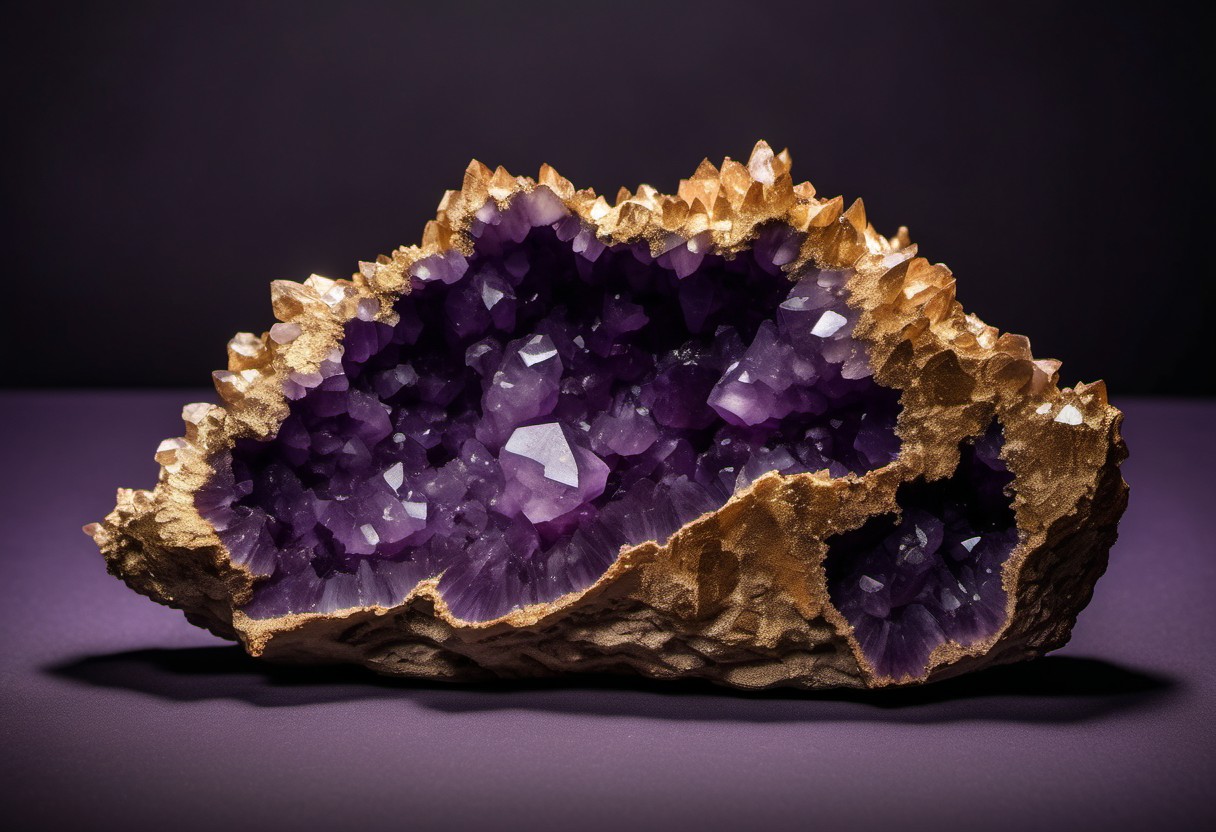
The word amethyst comes from the Greek amethystos, a compound built from the negating prefix a- and methystos, meaning intoxicated. Put plainly, the name means "not drunk," and the Greeks meant it literally. Wine cups were carved from the stone, and wine goblets were studded with it, on the belief that amethyst could keep its owner clear-headed no matter how much they drank. It's one of the few gemstone names in continuous use today that still carries its original, functional meaning stamped right into the syllables.
Purple Quartz, Courtesy of Iron and Radiation
Strip away the mythology and amethyst is chemically identical to clear quartz, silicon dioxide, with one difference: trace iron impurities locked into the crystal structure. On their own, those iron impurities wouldn't produce purple. It takes natural irradiation, background radiation absorbed over long geological stretches, to alter the iron's electronic structure and produce the violet-to-deep-purple color amethyst is known for. Heat the stone past a certain threshold and that color shifts, sometimes turning amethyst into yellow-orange citrine, which is why so much commercial citrine on the market today actually started as amethyst before a kiln got involved. Brazil and Uruguay now produce most of the world's supply, often found lining the inside of geodes in cathedral-sized clusters.
From Roman Vineyards to Catholic Cardinals
The sobriety association didn't stay confined to Greek symposiums. Medieval and Renaissance Catholic clergy adopted amethyst as the stone of choice for bishops' rings, partly for its rich color, associated with piety and humility, and partly because the older Greek meaning, temperance, folded neatly into Christian ideals of restraint. It's still sometimes called the "bishop's stone" for this reason. European royalty picked it up too; amethyst appears in the British Crown Jewels and was a favorite of Catherine the Great, prized in an era when purple in general signified rank, long before synthetic dye made purple affordable for anyone but the powerful.
No other common gemstone carries a job description in its own name. Amethyst was never just decoration. It was worn as an instruction.
What People Reach for Amethyst For Now
That old idea of clarity over chaos carried forward into how amethyst is used today, just translated into different language. In current crystal practice, it's traditionally associated with calm, with quieting a busy mind, and with supporting intuition rather than impulsiveness, an echo of the same instinct that put it in wine cups two thousand years ago. Many practitioners keep it near the bed for this reason, treating it as a stone for settling down rather than winding up. It isn't a treatment for anything, and it was never meant to be one. It's a very old reminder, carried in violet quartz, that clarity was worth naming a rock after.
For more reflections like this one, wander over to The Kyshara Realm, or see what Kyshara is building.
If you would like to know which stones suit your own season and intent, Kyshara's Crystal & Gemstone reading is built for exactly that.