The Karmic Lessons Spread: Six Cards for the Pattern You Keep Meeting by Different Names
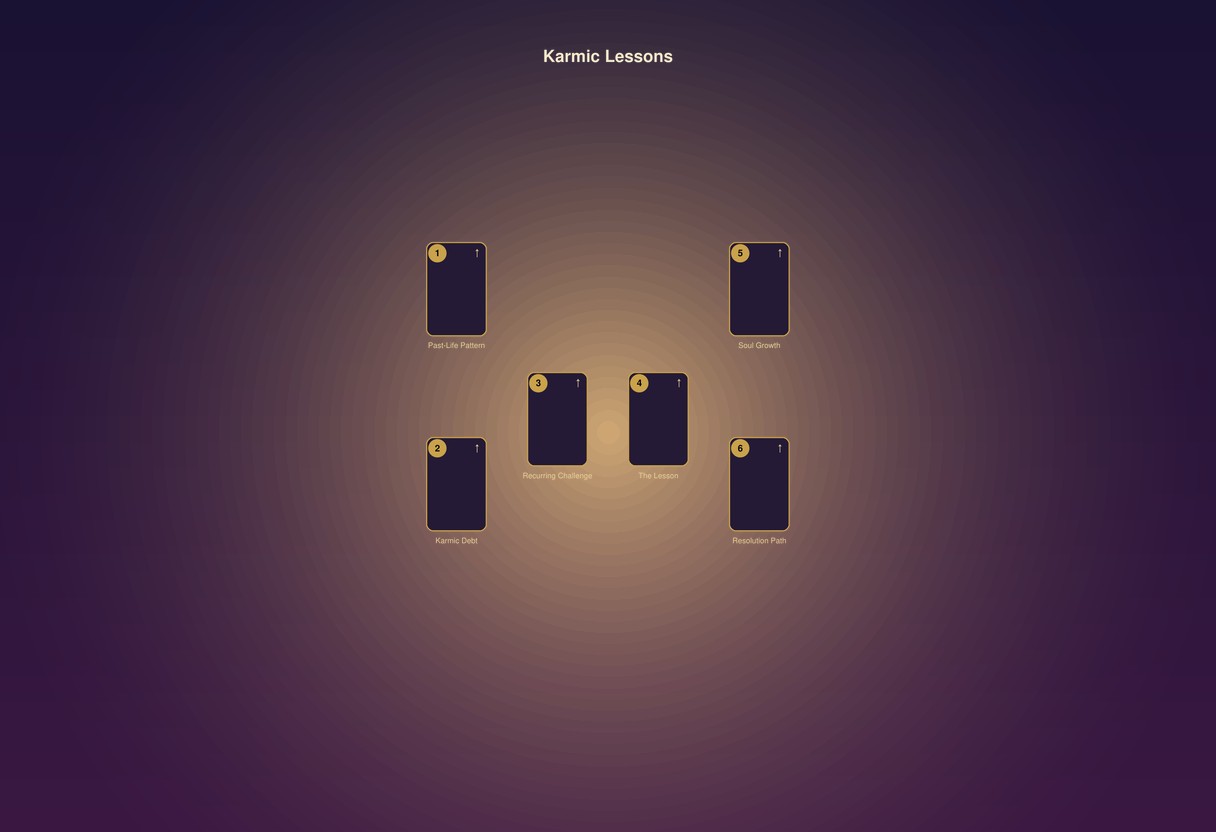
Everyone has one — a situation that keeps happening in a new costume. A relationship that keeps ending the same way with a different person. A job that keeps souring on the same terms with a different manager. Call it karma, call it a pattern, call it whatever fits your worldview; the experience is the same either way, and it's the reason the Karmic Lessons spread exists. It's six cards built to trace a loop from where it entered your life to where it can finally exit.
The Pattern Arrives Before You Do
The first card, Past-Life Pattern, names the shape that got carried into this life — the tendency, the reflex, the thing that feels older than any specific memory you have of learning it. Whether you take that literally or as a useful fiction for "this predates my current understanding of it," the card's job is the same: to put a name on the shape before asking anything else about it. Karmic Debt, second, gets more specific — what, exactly, is the imbalance your soul seems to have shown up to correct. It's rarely abstract once it's named. It usually sounds like something very particular: a pattern of taking without giving, or giving until there's nothing left, or trusting too fast, or never trusting at all.
The Loop Names Itself, If You Let It
Recurring Challenge, the third card, is where the spread gets concrete. It's not asking about the pattern in the abstract anymore — it's asking what the loop actually looks like when it repeats. This is usually the card people recognize fastest, sometimes with a wince, because by the time you're consulting a spread about karma, you already half-know what it's going to say. The value isn't in the surprise. It's in seeing the loop named plainly, outside your own head, on a card that isn't trying to spare your feelings.
By the time the third card is on the table, most people already know what it's going to say — the spread's value isn't the surprise, it's the confirmation.
From Naming the Loop to Learning From It
The Lesson, fourth, asks what all of this repetition has actually been trying to teach — not in a punishing sense, but in the sense of: what would you finally understand if this stopped happening? Soul Growth, fifth, pushes further and asks who you become once you've learned it. This is the spread's turning point, where it stops describing the trap and starts describing the person who gets to walk out of it.
Resolution Isn't Punishment Fulfilled — It's a Door
The sixth and final card, Resolution Path, is the practical one: how, specifically, does this karma actually get released? Not through suffering harder or waiting it out, but through some concrete shift in behavior, boundary, or belief that the previous five cards have been quietly building toward. Karma, read this way, isn't a debt collector. It's closer to a teacher who keeps assigning the same lesson until it's finally turned in.
If you'd like this pattern read live rather than traced solo, the Karmic Lessons spread is available through Kyshara's readings. More reflections like this one live on at The Kyshara Realm.